| 15th Fine Arts Festival – 2009 |
9th Dec 2009 |
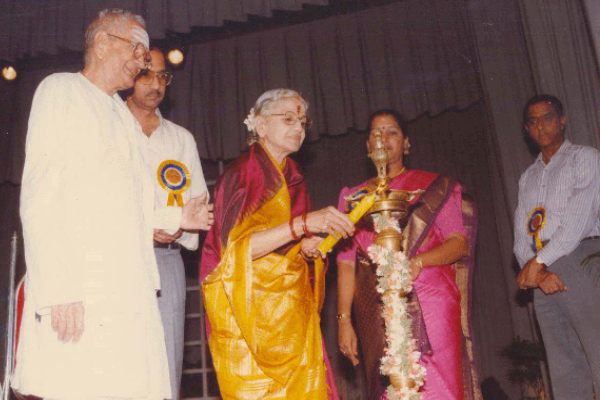
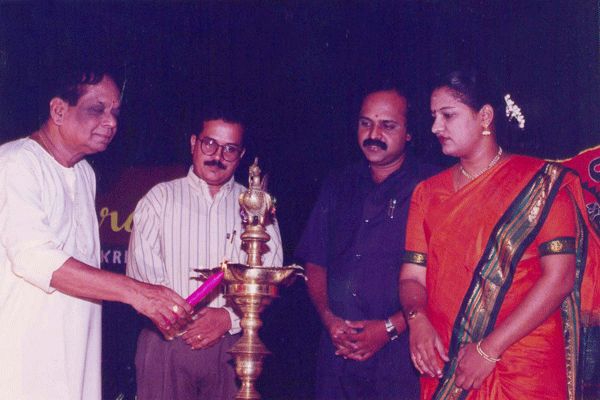
6.00 p.m : Inauguration by Shri T.Thenappan, General Manager, Indian Overseas Bank – presided by Dr. Nalli Kuppuswamy Chetti President, Mudhra – Guest of Honour: Shri ‘Vikku Vinayakram’ – Chief Guests: Shri A. Natarajan, Former Director, Chennai Doordarshan,- Mudhra Award of Excellence presented to Prof. Trichy Sankaran (Outstanding Mridangam Exponent, Composer, Academician and Cultural Ambassador)
7.00 pm : Madurai T.N.S.KRISHNA – Mysore Srikanth – Trichur C.Narendran – K.V.Gopalakrishnan
|
| 10th Dec 2009 |
6.15pm : Harikatha “KRISHNA LEELA” by KALYANAPURAM AARAVAMUDHACHARIAR – Dr.Hemalatha – A.S.Ranganathan
|
| 11th Dec 2009 |
6.15 pm : Harikatha “SOODIKODUTHA SUDARKODI” by KALYANAPURAM AARAVAMUDHACHARIAR – Vittal Ramamurthy – Melakkaveri Balaji
|
| 12th Dec 2009 |
6.15 pm : MADURAI T.N.SESHAGOPALAN – M.Chandrasekaran – Guruvaiyur Dorai – T.V.Vasan
|
| 13th Dec 2009 |
6.15 pm : NEYVELI SANTHANAGOPALAN – V.V.Ravi – Mannargudi Easwaran – Udupi Sridhar – Nerkunam Sankar
|
| 14th Dec 2009 |
6.15 pm : PRIYA SISTERS – M.A.Krishnaswamy – Parupalli Phalgun – S.V.Ramani
|
| 15th Dec 2009 |
6.15 pm : “NAMASANKEERTHANAM” by UDAYALUR KALYANARAMAN
|
| 16th Dec 2009 |
6.15 pm : “NAADHA PRAVAHAM” by V.V.SUBRAHMANYAM, V.V.Ravi, Mullaivasal Chandramouli, V.V.S.Murari, B.U.Ganesh Prasad & Sunitha (6 Violins) – Guruvayur Dorai – Thirupunitura Radhakrishnan – Srirangam Kannan
|
| 17th Dec 2009 |
6.15 pm : “SRI PANDURANGA LEELAI” by KADALUR GOPI BHAGAVATHAR
|
| 18th Dec 2009 |
6.15 pm : KARNATIC HINDUSTANI JUGALBANDI – LALGUDI G.J.R.KRISHNAN(Violin) PANDIT BALESH(Shenai) Mannargudi Easwaran(Mridangam) Ravindra Havagal(Tabla)
|
| 19th Dec 2009 |
Talented Young Musicians
9.00 am : Muthuswami Dikshitar Kritis on Lord Siva by REVATHY KUMAR – Hosahalli V.Raghuram – Ethirajan
10.15 am : Thamizh Moovar by V.PRADEEP KUMAR – K.J.Dileep – N.C.Bharadwaj
11.30 am : Compositions of GNB by V. DEEPIKA – S.P.Ananthapadmanabha – Arjun Ganesh
12.45 pm : Papanasam Sivan’s Compositions by BRINDA MANICKAVASAKAM – U.N.Niranjan – Varun Ramaswamy
2.00 pm :Ragam Tanam Pallavi by K.P. NANDINI – H.V.Raghuram – Thalaignayiru Harish Kumar
3.15 pm :Tharangams of Narayanatheerthar by R. SWATHI – Parur M.S. Ananthakrishnan – Nanganallur Vignesh.
6.15 pm :Carnatic Music by ANOORADHA SRIRAM – Ambika Prasad – Arjun Kumar – Papanasam S.Sethuraman
|
| 20th Dec 2009 |
Talented Young Musicians
9.00 am : Compositions on Devi by K.SUBHIKSHA – Sundeep Bharadwaj – Guru Raghavendra
10.15 am :Compositions of Mysore Vasudevachar by V.BHARAT KUMAR – K.Rahul – Uzhavoor K. Babu
11.30 am :Compositions on Lord Rama by CHAITRRA SAIRAM – M.Rajeev – Kumbakonam Swaminathan
12.45 pm :Compositions of Thyagaraja by RAHUL NARAYANAN – Sudha R.S.Iyer – Thirucheri Kaushik Rajagopal
2.00 pm :One Raga One Kriti by ADITYA PRAKASH – Akkarai Swarnalatha – Arthavan Selvanathan
3.15 pm :Tamizhe Amuthe by V. SREE CHITRA – Villiwakkam Raghuraman – Thillaisthanam Suryanarayanan
7.00 pm :Drama “ORU KOODAI PASAM” Written & Directed by K. BALACHANDER
|
| 21st Dec 2009 |
6.15 pm :“VADHYA THARANGINI” by V.L.KUMAR – ALLAM DURGAPRASAD – THIRUVARUR SWAMINATHAN – MUDHRA BHASKAR – N. SUNDAR – PUDUKKOTTAI RAMACHANDRAN – PAPANASAM SETHURAMAN
|
| 22nd Dec 2009 |
5.30 pm : DOCUMENTRY TO STALWARTS (M.L.Vasanthakumari)
6.15 pm :AMUDHUM THENUM by R. SURYAPRAKASH (Carnatic Classical Kritis and Vintage Hits ) – V.Suresh Babu – Manarkoil J.Balaji – A.S.Krishnan – Thenkasi Paramasivam – Venkatasubramanian
|
| 23rd Dec 2009 |
5.30 pm : DOCUMENTRY ON STALWARTS (G.N.Balasubramaniam)
6.15 pm :Varakari Sampradaya Harikeerthan – SRI TUKKARAM GANAPATHY MAHARAJ
|
| 24th Dec 2009 |
5.30 pm : unique documentary on Dr.M.S.SUBBULAKSHMI
6.30 pm : Raga Anubhavam – An exotic journey into the beautiful world of Ragas by DR. RADHA BHASKAR with SREYAS NARAYANUN, VIDYA KALYANARAMAN, BHARAT SUNDAR & DHARINI – Melakkaveri Thiagarajan – Delhi Sairam – H. Sivaramakrishnan
|
| 26th Dec 2009 |
5.30 pm : a unique documentary on MAHARAJAPURAM SANTHANAM
6.15 pm : KADRI GOPALNATH – A.Kanyakumari – Patri Satishkumar – Udayraj Karpur – Bangalore Rajasekhar
|
| 27th Dec 2009 |
4.00 pm : BHARGAVI GANESH – Abhinav Ganesh – Navin Basavanhally
5.30 pm : a unique documentary on Stage Veteran NAWAB RAJAMANICKAM PILLAI
6.15 pm : BHAJAN SANDHYA by O.S.ARUN – Mullaivasal G. Chandramouli – A.V.Manikandan – Ganapathy & Kiran – Kalai Selvan
|
| 28th Dec 2009 |
5.30 pm : a unique documentary on T.K.S.BROS
6.15 pm : MALLADI BROTHERS (SRIRAM KUMAR & RAVI KUMAR) – Mysore Manjunath – Umayalpuram Sivaraman – DR. S. Karthick
|
| 29th Dec 2009 |
5.00 pm : B. KANNAN – Bombay V.Anand – Prapancham Ravindran – Prashanth – N.Sundar
6.30 pm : a unique documentary on Stage Veteran “Y.G.PARTHASARATHY”
7.00 pm :Y.GEE. MAHENDRA’S DRAMA “VIETNAM VEEDU”
|
| 30th Dec 2009 |
6.15pm : Karnatic – Hindustani Jugalbandi by SRIRAM PARASURAM
|
| 31st Dec 2010 |
6.15 pm : SIKKIL GURUCHARAN – R.K.Shriramkumar – Umayalpuram K.Sivaraman – B.S.Purushothaman
|
| 1st Jan 2010 |
9.30 am : T.N.KRISHNAN & VIJI KRISHNAN NATARAJAN – Thiruvarur Bakthavatsalam –Vaikom Gopalakrishnan
‘7.00 pm : TV’ VARADHARAJEN’S Drama “IPL KUDUMBAM”
|
| 2nd Jan 2010 |
6.30 p.m. : Bharatanatyam by SHARANYA BALAJI
7.00 pm : Kathak by DIVYA KASTURI
|
| 3rd Jan 2010 |
5.00 pm : Bharatanatyam by ANEESHA KRISHNAKUMAR (Disciple of Ramya Ramnarayanan)
7.00 pm : Bharatanatyam by SRI. PAVITHRA BHAT (Mumbai) (Disciple of Guru Sri Deepak Mazumdar)
|
| 4th Jan 2010 |
6.30 pm : Bharatanatyam by DIVYA KASTURI
|
| 5th Jan 2010 |
6. 30 pm : Bharathanatyam – “Navavidha Darsanam” by KEERTHANA RAVISHANKAR (Disciple of Mohanan & Sunitha Mohanan)
|
| 6th Jan 2010 |
6.30 pm : Bharathanatyam by SRUTHILAYA & ABHINAYA (Disciple of Roja Kannan)
|
| 7th Jan 2010 |
6.30 pm : “Nrithya Sandhya” by KALAKSHETRA MOHANAN & STUDENTS
|
| 8th Jan 2010 |
6.30 pm : Bharathanatyam by PADMALAKSHMI SURESH (Disciple of Kalaimamani Smt. Ranganayaki Jayaram)
|
| 9th Jan 2010 |
6.15 pm : RAGAM TANAM PALLAVI Concert by T.M.KRISHNA – R.K.Sriramkumar – Arun Prakash – N.Guruprasad
|
| 10th Jan 2010 |
10.00 am : STHREE THYAGARAJA PANCHARATHNAM SRUTI 5 – For the first time a unique homage to Saint Thiagaraja by all women artists during music festival – Participants : Dr.Radha Bhaskar, Gayathri Girish, Dr.Subashini Parthasarathy, Subha Ganesan, Padmavathi Nagarajan, Varalakshmi Anandkumar,Vijayalakshmi Subramaniam, Geetha Rajasekar, Raji Gopalakrishnan, Girija Ramaswamy, Dr.R.Abhiramasundari, Vasuda Kesav, Vidya Kalyanaraman, Swathi Srikrishna, Radha Ramji, Vasantha Rajagopal, Jayashree Jayaramakrishanan, Bhavani Ganesan, Padma Krishnan, T.M.Prabhavathi, Salem Gayathri, Gayathri Sankaran, Gayathri Sreyas, Uma Venkataraman, Krithika, Keerthana, Mayavaram Gita, J.B.Keerthana, Lakshmi Sriram, Seethalakshmi (Vocal) – Dr.M.Narmada, Kalyani Shankar, Srilakshmi Venkataramani, Sudha Iyer, Srividhya Iyer (Violin) – Shobhana, Jayalakshmi Sekar, Dr.R.S.Jayalakshmi(Veena) – N.S.Rajam, Tanjore Padma, Jayamangala Krishnamani, Rajna Swaminathan (Mridangam)
5.00 pm : SPECIAL FOUR HOUR Concert by P. UNNIKRISHNAN – Embar Kannan – Thiruvarur Bakthavatsalam – B.S.Purushothaman – Vaikom Gopalakrishnan
|